
A weekly clean can make your apartment feel under control. It will not necessarily make it ready for a landlord walkthrough, a new buyer, or the next set of keys. That is the real difference in move out cleaning vs standard cleaning: one maintains a lived-in home, while the other resets a space after you leave it.
For busy New Yorkers, choosing the wrong service can mean paying for a cleaning that does not cover the job at hand. If you are packing boxes, coordinating an elevator window, and trying to get your security deposit back, you need a clear scope of work – not guesswork.
Move Out Cleaning vs Standard Cleaning at a Glance
Standard cleaning is designed for homes that are actively being lived in. It handles the dirt, dust, and everyday buildup that accumulates between cleanings. Think wiped counters, vacuumed floors, cleaned bathrooms, and a kitchen that feels ready for the week ahead.
Move-out cleaning is a deeper, more detailed service for an empty or mostly empty property. The goal is to remove signs of occupancy from the places regular cleaning often does not reach: inside cabinets, behind appliances, along baseboards, and around fixtures. It is the difference between making a home tidy and making it ready to hand over.
Neither service is automatically better. It depends on the condition of the home and what needs to happen next. A family that wants ongoing help with a busy household usually needs standard cleaning. A renter facing a final inspection needs move-out cleaning. A homeowner listing a property may need a move-out-level reset even if they are not technically moving that day.
What Standard Cleaning Usually Covers
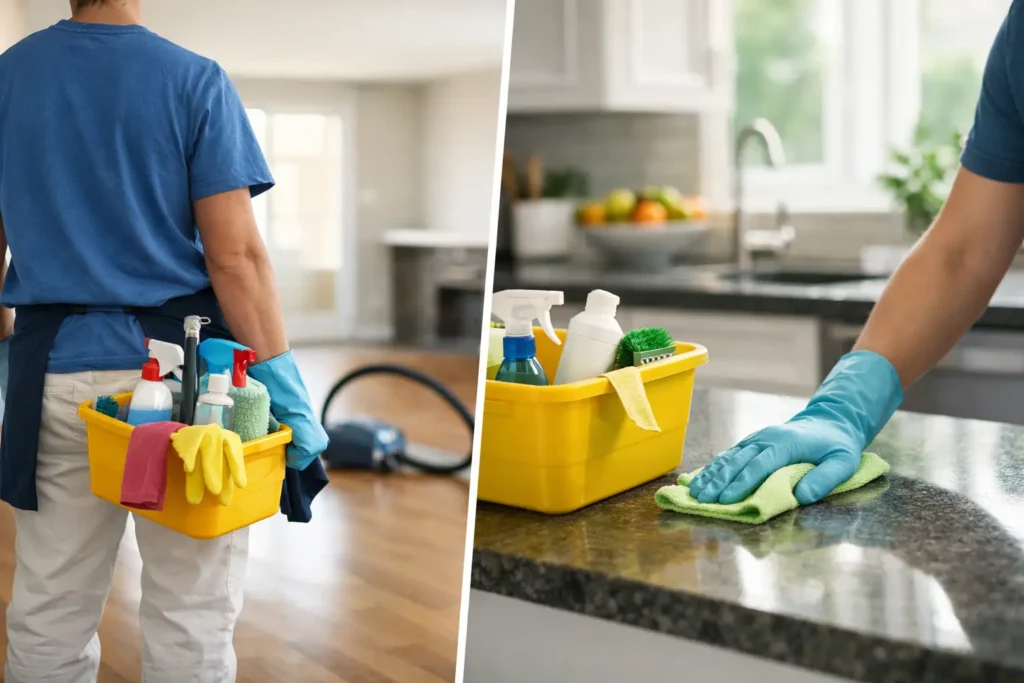
Standard cleaning focuses on the visible, high-use areas of your home. It is practical maintenance, not an all-day restoration project. A cleaner generally dusts reachable surfaces, vacuums and mops floors, cleans bathroom sinks, toilets, tubs, and showers, wipes kitchen counters and exterior appliance surfaces, and removes routine trash.
The exact scope can vary based on the home, the time booked, and any add-ons you request. If you have pets, children, or a high-traffic apartment, standard service can be scheduled weekly, biweekly, or whenever life gets too busy for the dust bunnies.
What standard cleaning usually does not include is just as important. Interior ovens, interior refrigerators, cabinet interiors, heavy soap scum, wall marks, window tracks, and areas blocked by furniture may need extra time or a specialized service. Those details are often not needed for day-to-day upkeep, which is why standard cleaning is typically faster and more affordable than a move-out appointment.
When Standard Cleaning Is the Right Choice
Choose standard cleaning when you are staying put and want reliable help keeping the home clean. It is a strong fit after a demanding workweek, before having friends over, after a hectic stretch with kids, or as part of a recurring home-care routine.
It can also work before a move if your apartment is still full of furniture and you only need a refresh while packing. Just do not mistake that refresh for a final clean. Once the furniture is gone, hidden dust and residue tend to show up fast.
What Move-Out Cleaning Is Designed to Do
Move-out cleaning is built for transition. The property is usually empty or close to empty, allowing cleaners to reach the surfaces that furniture, boxes, and daily routines hide. It is more detailed because the expectations are higher: the space should look clean, neutral, and ready for its next occupant.
A thorough move-out clean often includes detailed bathroom cleaning, kitchen degreasing, floors, baseboards, doors, trim, light switches, accessible vents, closets, shelves, and the inside of empty cabinets and drawers. Interior appliance cleaning may also be included or offered as an add-on, especially for ovens and refrigerators.
In New York apartments, this service often matters most in the kitchen and bathroom. Grease near the stove, residue in the refrigerator, mineral buildup around fixtures, and dust behind a toilet can stand out during a walkthrough. Closets also deserve attention. They may look empty, but corners, shelves, and tracks collect plenty of dust over time.
What a Move-Out Clean Cannot Fix
Cleaning makes a property cleaner. It does not repair damage. Nail holes, chipped paint, broken blinds, deep carpet staining, pest issues, mold, and damage to appliances may require a building super, repair professional, or separate restoration service.
That distinction protects everyone from surprises. If a mark is permanent or a surface is damaged, even a detailed cleaning may not make it disappear. Before booking, take photos of the property and review your lease requirements so you can identify cleaning needs versus repair needs.
The Biggest Differences: Time, Detail, and Access
The main difference is scope. Standard cleaning works around your life and your belongings. Move-out cleaning works through an empty space, with time allocated to detailed areas that are skipped during routine maintenance.
Time is another factor. A studio that receives regular standard cleaning may need only a few hours for a final reset. A multi-bedroom home with a greasy oven, full cabinets, and months of buildup will need more labor. The condition of the property matters more than the square footage alone.
Access also changes the work. For move-out cleaning, the best timing is after the truck is loaded and before keys are returned. Cleaners can reach all floors, walls, closets, cabinets, and appliances without working around furniture. If the apartment is not empty, say so upfront. The service can still help, but the results and timing may be different.
How to Choose the Right Service Before You Book
Start with the question: who is the cleaning for? If it is for you and your household, standard cleaning is likely the best place to start. If it is for a landlord, buyer, incoming tenant, property manager, or guest, move-out cleaning is usually the safer choice.
Next, consider your deadline. A recurring clean can be flexible. A move-out clean often has to fit between the moving truck, building rules, final walkthrough, and key return. New York buildings may require advance notice for service providers or restrict elevator use, so confirm those details early.
Finally, be direct about the property condition. Mention pets, smoke exposure, heavy kitchen grease, appliances that need interior cleaning, and any areas that have not been cleaned recently. Clear information leads to a more accurate quote and helps the cleaning team arrive prepared.
A Practical Move-Out Cleaning Checklist
Before the cleaning appointment, remove all personal items and trash, empty cabinets and drawers, and defrost the refrigerator if required. Make sure water and electricity are still on. Leave access instructions, parking or building entry details, and enough time before the final inspection.
After the service, do a quick walkthrough in daylight if possible. Check cabinets, closets, appliances, bathroom fixtures, floors, and any areas your landlord specifically mentioned. This gives you time to flag a concern before turning in the keys.
If you need dependable help during a move, Smart Cleaning can handle the final reset without adding another task to your moving-day list. The right cleaning service gives you one less thing to carry – and a cleaner start for whoever walks through the door next.