
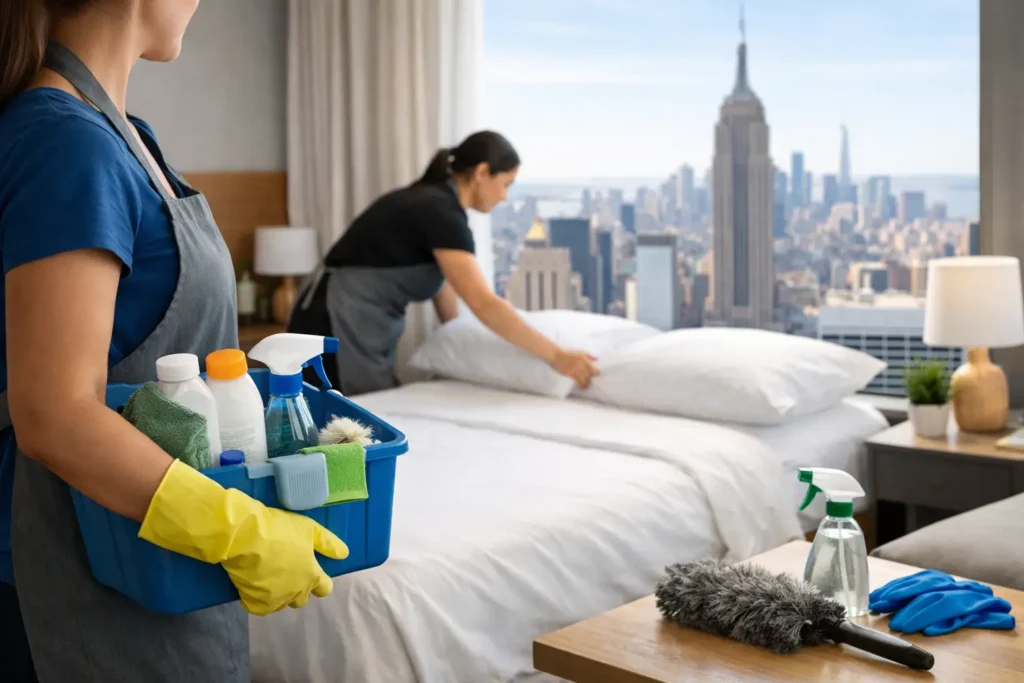
A guest checks out at 11:00 a.m. The next one arrives at 3:00 p.m., and the apartment needs to look like nobody has ever slept, cooked, showered, or dropped a suitcase there. That is the real purpose of an Airbnb turnover cleaning guide: not just to make a rental look clean, but to reset it quickly, consistently, and without last-minute stress.
For New York hosts, the pressure is even higher. Small spaces show clutter fast, building rules can limit access, laundry may need to happen off-site, and one missed detail can become a review that costs future bookings. A reliable turnover system protects your calendar, your rating, and your time.
What Airbnb Turnover Cleaning Really Includes
A turnover clean is more detailed than a quick tidy and more targeted than a full deep clean. The goal is to prepare the property for a new guest on a tight timeline. Every surface should feel fresh, every essential should be stocked, and the space should match the photos and promises in your listing.
The exact scope depends on your property and guest expectations. A studio with one bed may be reset in a few hours. A larger apartment with multiple bathrooms, a kitchen, and laundry can require a longer service window or a two-person team. If guests stay for weeks at a time, plan for more intensive cleaning between reservations. Short one-night stays create a different challenge: frequent resets with less room for delays.
A strong turnover covers three jobs at once: cleaning, inspection, and restocking. Skipping the inspection piece is where many hosts run into trouble. A cleaner may leave a space spotless but miss a broken lamp, a stained towel, an empty soap dispenser, or an item left behind by the previous guest.
Build Your Airbnb Turnover Cleaning Checklist
Consistency matters more than speed alone. A written checklist gives every reset the same standard, whether you clean the property yourself or use a professional team. It also makes it easier to spot what needs attention before the next check-in.
Start with a fast inspection
Before changing sheets or wiping counters, walk through the apartment with fresh eyes. Look for damage, missing items, unusual odors, maintenance issues, and belongings left behind. Check the thermostat, lights, locks, Wi-Fi equipment, remotes, and smoke or carbon monoxide detectors.
Take clear photos when something looks damaged or unusually dirty. This protects you if you need to document an issue through the booking platform. It also gives you a maintenance record, which is useful when managing a busy property remotely.
Reset the bedroom and living areas
Strip all used linens, including pillowcases, duvet covers, mattress protectors when needed, bath mats, and kitchen towels. Check pillows, the mattress, and upholstered furniture for stains, hair, or odors before making the bed with fresh linens.
Vacuum or sweep thoroughly, including under the bed and behind furniture when accessible. Dust visible surfaces, wipe switches and handles, clean mirrors, empty trash, and straighten furniture. In compact NYC apartments, a few misplaced items can make the entire room feel messy, so restore the layout shown in your listing photos.
Clean the bathroom to a guest-ready standard
Bathrooms carry a lot of weight in guest reviews. Remove all used towels and empty every bin. Clean and disinfect the toilet, sink, shower, tub, fixtures, and high-touch surfaces. Polish the mirror, wipe down shelves, and make sure the floor is dry and free of hair.
Then restock the essentials: toilet paper, hand soap, body wash or shampoo if provided, clean towels, and a bath mat. Do not assume supplies are still there because you stocked them last week. Turnovers need a physical check every time.
Handle the kitchen with extra care
A kitchen can look clean while still failing a guest’s first inspection. Wash and put away dishes, wipe down counters, clean the sink and faucet, empty the refrigerator of leftover food, and check the microwave for spills. Clean the stovetop, especially around burners and knobs, and wipe cabinet handles and appliance fronts.
Run the dishwasher if you have one, but do not leave it full for the next guest. Check the coffee maker, toaster, kettle, and any other amenity you advertise. Replace liners, restock dish soap and sponges, and make sure the trash is removed from the apartment.
Finish with entry and final details
The entry sets the tone before a guest even sees the rest of the home. Wipe the inside of the front door, clean the handle, shake out or vacuum the mat, and confirm that keys, fobs, or lockbox instructions are ready. If your building has strict lobby or elevator procedures, make sure your check-in information still reflects current rules.
Complete one final walk-through from the perspective of someone arriving with luggage. Turn on lights, check that the temperature is comfortable, close closets that are not for guest use, and look for hair, dust, smudges, or lingering odors. A quick final pass is often what catches the detail that would otherwise lead to a complaint.
Keep Turnovers on Schedule Between Bookings
The best cleaning process can still fail if the schedule is unrealistic. Start by comparing your checkout and check-in times with the actual time needed to clean, inspect, restock, and handle laundry. If the gap is narrow, you need backup options before a same-day booking appears.
Build a supply station either in a locked owner closet or nearby. Keep extra linens, towels, toilet paper, trash bags, paper towels, cleaning products, batteries, light bulbs, and basic replacement items together. This prevents a cleaner or co-host from losing valuable time searching for supplies across the city.
Laundry is often the bottleneck. If the unit does not have an in-home washer and dryer, keep enough linens for at least one full backup turnover, and ideally two during busy periods. Waiting for a wash-and-fold order can derail the entire reset. More linen inventory costs money upfront, but it is usually cheaper than canceling a reservation or rushing through a subpar clean.
It also helps to separate routine work from deeper maintenance. Every turnover should be guest-ready, but not every turnover requires washing walls or moving every piece of furniture. Schedule periodic deep cleaning for baseboards, grout, inside cabinets, refrigerator shelves, windows, upholstery, and areas behind large furniture. The frequency depends on occupancy, pets, cooking habits, and the condition of the apartment.
Common Turnover Mistakes That Hurt Reviews
The most frustrating guest complaints usually come from small misses, not dramatic failures. Hair in the shower, crumbs in a drawer, a full trash can, an unmade sofa bed, or a missing towel can make guests question the cleanliness of everything else.
Another mistake is using strong fragrances to cover odors. Heavy sprays can trigger allergies and may signal that something has been hidden rather than cleaned. Neutral, fresh air is generally better. If an odor remains after cleaning, identify the source. It may be trash, damp laundry, plumbing, upholstery, or a refrigerator issue.
Hosts also get into trouble by treating supplies as optional. If your listing promises coffee, toiletries, or kitchen basics, keep them consistent. You do not need to overstock expensive extras, but guests should never arrive to an empty roll of toilet paper or a coffee maker with no filters.
Finally, do not rely on memory. Even experienced hosts miss steps when they are managing messages, maintenance, pricing, and multiple check-ins. A checklist and final inspection create a repeatable standard when the day gets busy.
When to Hire a Turnover Cleaning Team
Self-managing cleaning can work for one property with flexible booking gaps. It becomes harder when you have back-to-back reservations, live outside the neighborhood, manage more than one unit, or simply do not want a checkout to control your whole day.
A professional turnover team gives you more than labor. The right team can provide dependable scheduling, clear communication, supply checks, and a trained set of eyes between guests. For NYC hosts, reliability matters as much as cleaning quality. A missed appointment can put an entire reservation at risk.
Before handing off turnovers, be specific about your property standards. Share your checklist, linen locations, owner-closet rules, building access instructions, trash procedures, and any items that need photo documentation. Ask how the team handles same-day turns, damage reports, and last-minute schedule changes. The lowest price is not always the best value if it leaves you chasing updates on check-in day.
Smart Cleaning helps New York hosts keep guest spaces clean, stocked, and ready for the next arrival. The best turnover plan is the one that gives every guest a clean first impression while giving you fewer things to worry about before the next door code goes out.