
The boxes are stacked, the keys are in your hand, and you are ready to make the place yours. Before the couch arrives and the cabinets fill up, use this move in cleaning guide to reset the space from top to bottom. Even a home that looks clean during a walkthrough can hold construction dust, old spills, grease, and grime in the places no one checks.
A proper move-in clean is not about making everything look perfect for one afternoon. It is about starting with clean surfaces, fresh air, and a kitchen and bathroom you can use with confidence. In a fast-moving New York move, that reset can make the difference between feeling settled and feeling like you are living around someone else’s mess.
Start Before the Boxes Take Over
An empty apartment or house is the easiest it will ever be to clean. You can reach baseboards, clean inside cabinets, and get behind appliances without moving furniture or working around unpacked bags. If you have access to the property before moving day, schedule the cleaning then. If not, keep a clear path through each room and clean before setting up large pieces.
Begin with a simple walk-through. Turn on lights, open cabinets, look under sinks, and check window ledges, vents, closets, and corners. Take photos of any existing damage, stains, pests, or maintenance concerns before you start. Cleaning can reveal issues that were hidden by dust or clutter, and documentation gives you a clear record for a landlord or property manager.
Work from high to low in every room. Dust and debris fall, so ceiling fans, vents, light fixtures, shelves, counters, and floors should be handled in that order. Save vacuuming and mopping for the end.
Gather supplies that handle the real job
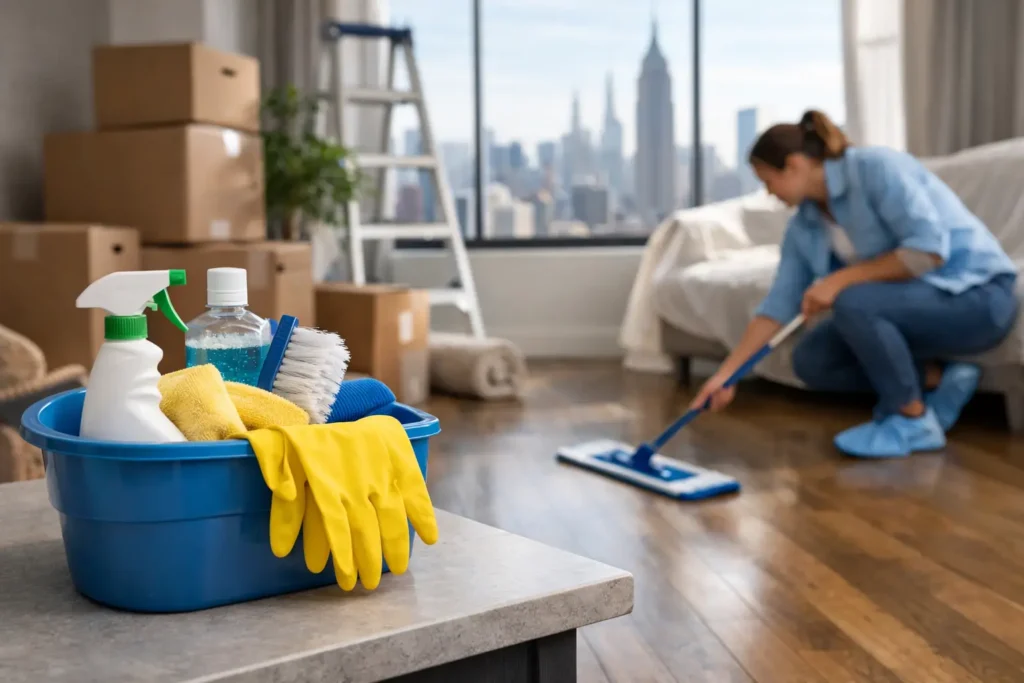
You do not need a closet full of specialty products, but a few reliable basics make the work faster. Keep microfiber cloths, a vacuum with attachments, a mop, a scrub brush, an all-purpose cleaner, dish soap, glass cleaner, disinfectant, baking soda, gloves, and trash bags nearby. For stubborn buildup, use a product designed for the specific surface rather than scrubbing aggressively and risking damage.
Never mix cleaning products, especially bleach with ammonia or acidic cleaners. Open windows when possible and use the bathroom fan for ventilation. In compact NYC apartments, fresh airflow matters just as much as the product you choose.
Move In Cleaning Guide: Handle the Kitchen First
The kitchen deserves priority because it is where you store food, cook, and make coffee when the rest of the home still feels like a maze of boxes. It is also the room most likely to have hidden grease, crumbs, and residue from a previous occupant.
Start with the refrigerator. Remove shelves and drawers if they are easy to take out, wash them with warm soapy water, and dry them fully before putting them back. Wipe the interior walls, door seals, handles, and the top of the appliance. Do not forget the floor underneath and the narrow space beside it, where dust tends to collect.
Next, clean cabinets and drawers inside and out. Vacuum loose crumbs first, then wipe with a lightly damp cloth and a cleaner that is safe for the finish. Pay close attention to handles, drawer pulls, and the shelf under the sink. If you find signs of leaks, mold, or pests, stop and report the issue instead of covering it up with cleaner.
Clean the oven, stovetop, microwave, sink, and countertop last. Degrease the range hood and backsplash, and check the microwave ceiling for splatters. Run hot water in the sink and inspect the drain. A slow drain is easier to address before your first full grocery run.
Make the Bathroom Feel Truly Clean
A bathroom can appear tidy while still needing serious attention. Focus on surfaces that touch skin, collect moisture, or hide mineral buildup.
Spray the tub, shower walls, toilet, sink, and tile first so the cleaner has time to work. Then wipe mirrors, light switches, cabinet interiors, and fixtures. Use a grout brush only where needed. Heavy scrubbing may not remove old discoloration, and it can damage worn grout or caulk in older buildings.
Check around the toilet base, beneath the vanity, and inside the medicine cabinet. These are easy-to-miss areas that can hold dust, hair, and residue. Finish by disinfecting high-touch points such as faucet handles, flush levers, doorknobs, and light switches.
If the shower curtain or liner was left behind, replacing it is often more practical than trying to rescue it. The same goes for a worn toilet brush or heavily stained bath mat. A few fresh basics can make the room feel immediately more comfortable.
Reset Bedrooms and Living Areas
In bedrooms and living spaces, the goal is to remove dust that settles during vacancies, repairs, and move-out traffic. Start with ceilings, fans, vents, and light fixtures. Then wipe window sills, blinds, closet shelves, doors, trim, and baseboards.
Closets deserve more than a quick glance. Vacuum corners, wipe shelves and rods, and let them dry before adding clothes or linens. In older apartments, check for sticky shelving paper, forgotten items, or signs of moisture. It is much easier to solve these problems before your wardrobe is unpacked.
For floors, vacuum slowly along walls and under radiators. Then mop hard flooring using the right amount of water for the material. Wood and laminate should not be soaked. If the carpet has lingering odors, visible stains, or heavy traffic marks, a deeper carpet or upholstery cleaning may be worth scheduling before furniture goes in.
Do not skip high-touch and hidden surfaces
The places people touch most often are not always the places they clean most often. Before you unpack, give extra attention to these spots:
- Light switches, outlet covers, intercoms, and thermostat controls
- Doorknobs, cabinet pulls, window latches, and closet handles
- Air vents, radiator covers, ceiling-fan blades, and return grilles
- Baseboards, door frames, window tracks, and corners behind doors
- Laundry-machine dispensers, dryer lint areas, and utility closets
These details take time, but they help remove the dust and residue that make a new place feel less than fresh.
Know When a DIY Clean Is Not Enough
A focused DIY clean works well for a recently maintained apartment with light dust and a few touch-up needs. It may not be the best use of your moving-day energy when the kitchen has baked-on grease, the bathroom has hard-water buildup, or the home needs full attention before furniture and family arrive.
Professional move-in cleaning is especially useful when you are coordinating elevator times, delivery windows, building rules, kids, pets, or a tight lease handoff. The trade-off is simple: doing it yourself can save money, while hiring help can save the hours and physical effort that moving already demands. It depends on the condition of the home, your schedule, and how much cleaning you want to take on after packing everything you own.
For New Yorkers who need a dependable reset without adding another task to moving day, Smart Cleaning can handle the detailed work while you focus on getting settled.
Finish With Fresh Air and a Functional Setup
Once the cleaning is done, take out all trash, run the vacuum one final time, and open windows for a short period if weather and building conditions allow. Replace the HVAC filter if you have access to it, or ask building management when it was last changed. Fresh linens, a clean shower, and a stocked kitchen can wait until after the surfaces are ready.
Then unpack in the rooms you will use first: bathroom essentials, bedding, basic kitchen supplies, and everyday clothes. You do not need to finish the whole apartment on day one. A clean starting point gives you room to settle in at a pace that works for you – without dust bunnies setting the agenda.