
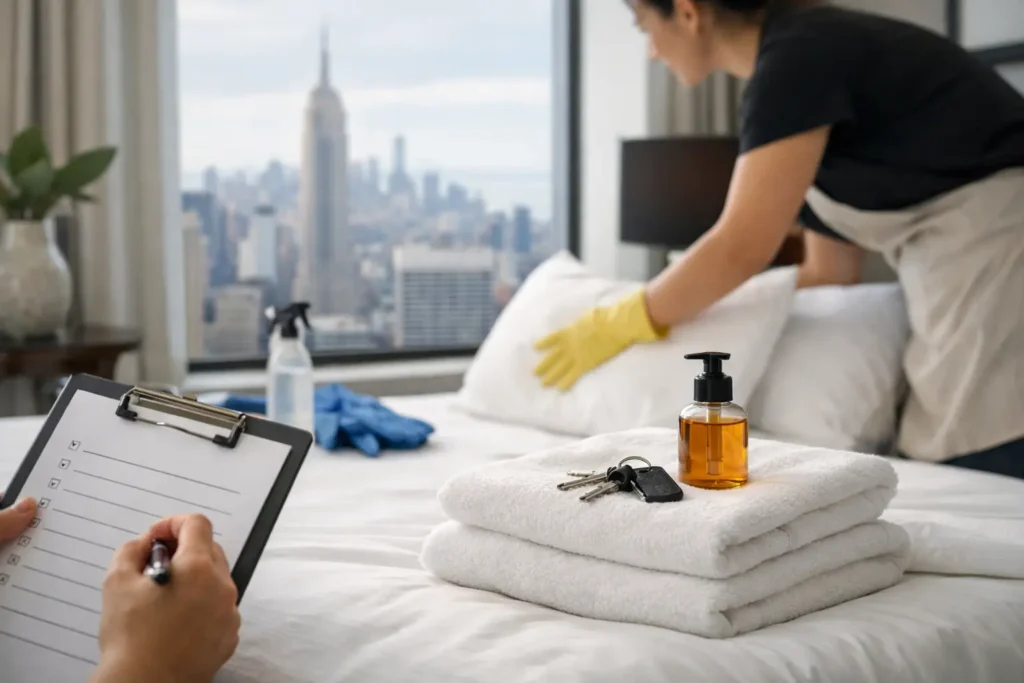
A late checkout, a same-day arrival, and a missing roll of toilet paper can turn a profitable booking into a stressful scramble. The best Airbnb turnover checklist gives New York hosts a repeatable system for getting every space clean, stocked, photographed, and ready before the next guest walks through the door.
A good turnover is not just a cleaning task. It is a quality-control process. Guests notice the obvious things, like hair in the shower or crumbs on the counter, but they also notice the details: fresh towels folded evenly, a working remote, enough coffee for the first morning, and a front door that locks without a struggle. Those details shape reviews, ratings, and whether guests feel they got what they paid for.
Why Airbnb Turnovers Need a Real System
New York short-term rentals move fast. A delayed cleaner, subway traffic, building access issue, or guest who leaves later than expected can cut a turnover window down to a few hours. When the work lives only in someone’s memory, small but costly steps get missed.
A checklist keeps the standard consistent whether you manage one apartment or several. It also makes handoffs easier when more than one person helps with cleaning, laundry, supplies, or inspections. The goal is simple: every guest should arrive to the same clean, comfortable, functional experience.
The right checklist should be detailed enough to prevent mistakes but practical enough to use during a busy reset. It should also reflect the actual property. A studio with a keypad entry has different needs than a three-bedroom unit with a washer, doorman access, and multiple beds.
Best Airbnb Turnover Checklist: The Complete Reset
Use this sequence from arrival to final lockup. It reduces backtracking and makes it easier to spot problems before the next check-in.
1. Start With a Quick Walk-Through
Before touching anything, enter the unit and assess its condition. Check for guest belongings, damage, unusual odors, stains, spills, broken items, and maintenance issues. Open curtains and turn on lights so you can see the space clearly.
Look at high-risk areas first: the entryway, kitchen, bathroom, bedding, upholstery, and floors. If something needs repair, document it right away with clear photos. A small issue, such as a loose toilet seat or a missing smoke detector battery, is much easier to handle before a guest arrives than after they send a message at 11 p.m.
Collect all trash and recycling, including items under beds, behind doors, in drawers, and on balconies or patios if applicable. In NYC buildings, follow the property’s trash and recycling rules carefully. Overflowing bags left in a hallway or lobby can create an avoidable problem with neighbors or building management.
2. Strip, Sort, and Reset the Linens
Remove all used sheets, pillowcases, towels, bath mats, and kitchen towels. Check mattresses, mattress protectors, pillows, and blankets for stains or damage before making the beds. A fast turnover is never a reason to put questionable linens back into service.
Use one consistent bed-making standard. Fresh fitted sheet, flat sheet or duvet, clean pillowcases, and a neatly arranged top layer should look intentional, not rushed. If you provide extra blankets or pillows, make sure they are clean and easy for guests to find.
Towels deserve the same attention. Set out the number promised in your listing, then add a sensible backup if the space allows. Fold them uniformly and place them where guests expect them. A clean bathroom with no usable towel is still a poor arrival experience.
3. Clean the Kitchen for the Next Guest, Not the Last One
Start by clearing and sanitizing counters, tables, cabinet handles, appliance controls, and sink fixtures. Wash, dry, and put away all dishes, cookware, utensils, and glassware. Check the dishwasher, oven, microwave, toaster, refrigerator, and coffee maker for food residue and forgotten items.
Empty the refrigerator completely unless your house rules clearly state otherwise. Wipe shelves and drawers, then confirm that the refrigerator and freezer are cold enough to operate properly. Clean the sink, run the disposal if there is one, and replace the dish sponge or cloth if it looks worn or smells off.
Restock the basics according to your listing: paper towels, dish soap, dishwasher pods, trash bags, coffee, tea, and any cooking essentials you promise. Do not overstock expensive items if theft or waste has been a problem. The right amount depends on the length of stay and your typical guest profile.
4. Make the Bathroom Feel Fresh
The bathroom is one of the fastest places for guests to judge cleanliness. Scrub and disinfect the toilet, shower or tub, sink, faucet, vanity, mirrors, and high-touch surfaces. Remove hair from drains, shower walls, corners, and floors. Then dry polished surfaces so they do not look streaky.
Replace the toilet paper roll and leave at least one spare where guests can find it. Refill hand soap, check shampoo and body wash dispensers if provided, and put out clean towels and a fresh bath mat. Empty the bathroom trash completely.
Do a final odor check. Heavy fragrance can feel like an attempt to cover a problem, so aim for clean and neutral. If odor lingers, investigate the source instead of simply spraying air freshener.
5. Detail the Living Areas and Bedrooms
Dust visible surfaces, wipe switches and door handles, clean mirrors, and vacuum upholstery as needed. Vacuum or mop floors throughout the unit, including under furniture where practical. In a compact apartment, dust and debris collect quickly in corners, around radiator covers, and near windows.
In bedrooms, inspect under the bed and inside closets, drawers, and nightstands for forgotten guest items. Wipe bedside tables and lamps, check that all lights work, and make sure charging outlets or power strips are safe and accessible. If your listing includes a desk or work area, clean it and remove leftover papers or cables.
For living rooms, straighten cushions, fold throws, clean the coffee table, and test the television and remote. Replace remote batteries before they fail, not after a guest reports a problem. This is a small step that prevents a surprising number of messages.
6. Restock Supplies Without Guesswork
A turnover checklist should include inventory, not just cleaning. Count the supplies guests rely on and replace what is low before it becomes empty. Keep a simple backstock system so the person completing the turnover does not need to run to the store between bookings.
Your core restock items may include:
- Toilet paper, tissues, paper towels, and trash bags
- Hand soap, dish soap, laundry products, and cleaning supplies
- Coffee, tea, bottled water, or welcome items promised in the listing
- Bath towels, washcloths, kitchen towels, and extra bedding
- Batteries, light bulbs, basic first-aid items, and spare keys where appropriate
Avoid leaving excessive supplies out in the unit. A few clearly placed essentials feel helpful. A cluttered closet full of random products can confuse guests and make cleaning harder.
7. Test What Guests Will Use
Cleaning is only half the job. Before leaving, test the practical features that affect check-in and comfort. Confirm Wi-Fi is connected, the TV works, remotes respond, lights turn on, and heating or air conditioning operates as expected. Check smoke and carbon monoxide detectors, especially after battery changes or maintenance work.
Test locks, keypads, key boxes, and entry instructions. In apartment buildings, make sure guests can access the correct entrance and that any required fobs, keys, or elevator instructions are ready. If the building has strict guest policies, make those instructions clear before arrival rather than hoping guests figure them out at the door.
8. Finish With a Guest-Ready Inspection
The final inspection should happen after all cleaning tools, laundry bags, and supplies are removed. Walk the unit as a guest would. Stand at the entry, look at the room, and notice what catches your eye first. Is the bed neat? Are counters clear? Does the bathroom look dry and fresh? Are there any visible hairs, streaks, crumbs, or clutter?
Close windows, adjust the thermostat to the appropriate setting, turn off unnecessary lights, and make sure appliances are off. Take a few final photos for your records, particularly after a deep clean, repair, or damage concern. Then lock up and send check-in information only when you are confident the unit is truly ready.
When to Bring in Turnover Cleaning Support
Some hosts can handle occasional resets themselves. That approach may work for a single property with flexible check-in times. But same-day bookings, multiple units, travel, and full calendars make self-managed turnovers harder to sustain.
Professional Airbnb turnover cleaning can provide a more dependable routine when time is tight. A trained team can handle the cleaning, linen reset, basic restocking, and final presentation while you focus on guest communication and property operations. For NYC hosts, that support can be especially useful when building access, traffic, and narrow turnover windows leave little room for delays.
Smart Cleaning helps hosts keep guest spaces clean, organized, and ready for the next arrival without turning every checkout into a personal emergency.
A checklist will not prevent every surprise, but it gives you a reliable response when the clock is running. Keep it visible, update it after guest feedback, and treat every reset as the first impression it is.