
Most moves get chaotic right before the finish line. Boxes are stacked, the lease clock is ticking, and the last thing anyone wants is to realize the oven, baseboards, or bathroom grout still need attention. A solid move in move out cleaning checklist keeps the job clear, faster, and a lot less stressful.
If you’re leaving a place, the goal is simple: hand it over looking clean, cared for, and ready for inspection. If you’re moving in, you want a fresh start before furniture and rugs cover everything up. The checklist changes slightly depending on which side of the move you’re on, but the core work stays the same – clean the spaces people notice first, then handle the details that get missed when you’re in a rush.
Why a move in move out cleaning checklist matters
Moving cleaning is different from regular upkeep. Weekly cleaning helps a home look good while you live in it. Move-related cleaning is about resetting the property. That usually means empty rooms, inside cabinets, behind appliances, and buildup that may have been ignored for months.
For renters, a thorough clean can help protect a security deposit and avoid a last-minute scramble with building management or a landlord. For homeowners selling a place, cleanliness affects how buyers experience the home, even after the furniture is gone. For new tenants or owners, cleaning before move-in is simply easier. It is much faster to wipe shelves, sanitize bathrooms, and mop floors when nothing is in the way.
In New York, timing matters even more. Elevators get booked, move windows are tight, and turnover can happen fast. A checklist gives structure when the schedule is already packed.
Start with a realistic plan
Before you pick up a sponge, do a quick walkthrough. Look for problem spots such as grease in the kitchen, soap scum in showers, dust on vents, scuffed walls, and debris left in closets or drawers. This tells you whether you are dealing with a light reset or a deeper clean.
It also helps to know what cleaning can and cannot fix. Dust, grime, fingerprints, and mild buildup are cleaning issues. Chipped paint, damaged caulk, deep carpet stains, and broken fixtures are repair issues. People often lose time trying to scrub something that actually needs maintenance.
If the home is empty, start at the top and work down. Dust first, then surfaces, then floors. If movers are still coming and going, save the final floor cleaning for the end.
Room-by-room move in move out cleaning checklist
Kitchen
The kitchen usually takes the most time because it collects grease, crumbs, and hidden mess. Start with cabinets and drawers. Empty them fully, vacuum out loose debris if needed, and wipe the interiors and fronts. Pay attention to handles, corners, and the top edges of upper cabinets where dust and grease like to settle.
Next, clean countertops, backsplash, and sink. Remove food residue, sanitize surfaces, and polish fixtures if they show water spots. The refrigerator should be emptied, shelves and drawers removed if possible, washed, dried, and replaced. Wipe the inside walls, door seals, and exterior front.
The oven and stovetop deserve extra time. Remove burner grates, knobs if safe to do so, and any loose crumbs. Degrease the cooktop, clean the oven door, and handle the inside if buildup is visible. For move-out cleaning, this is one of the first places landlords notice. Finish by cleaning the microwave, dishwasher front and filter area, and any exposed spaces around appliances.
Bathrooms
Bathrooms need more than a quick wipe-down. Start with the shower and tub, especially around corners, grout lines, shelves, and doors. Soap scum, mildew staining, and hard water marks can make a bathroom feel dirtier than it is, so this area deserves patience.
Clean and disinfect the toilet inside and out, including the base and the area behind it. Wipe the vanity, sink, mirror, and faucet, then open drawers and cabinets and clean inside them too. If there is an exhaust fan cover collecting dust, wipe that down as well. A freshly cleaned bathroom should look dry, bright, and free of residue, not just smell like cleaner.
Bedrooms and living areas
These rooms may look easier, but they often hide dust in plain sight. Start with closets, shelves, windowsills, and baseboards. Wipe doors, handles, trim, and light switches. If walls have marks, spot-clean gently, but do not overdo it if the paint finish is delicate.
Ceiling fans, vents, blinds, and light fixtures are easy to skip during a move, but they stand out in an empty room. Once surfaces are done, vacuum carpets carefully along edges and corners. If the floors are hard surface, sweep first and then mop with the right cleaner for the material.
Entryways, hallways, and extras
Entry areas shape the first impression. Clean the front door, threshold, inside glass if there is any, and nearby walls or trim that show fingerprints. Hallways should get the same baseboard and floor attention as the main rooms.
Don’t forget utility spaces. Laundry areas, mudrooms, and storage closets collect lint, dust, and random debris. If the unit includes a washer and dryer, wipe the exterior and remove obvious lint buildup around the machines.
The details people miss most often
A good move in move out cleaning checklist is not just about the obvious surfaces. The missed details are usually what make a place feel only half clean.
Light switches, outlet covers, doorknobs, cabinet pulls, window tracks, and air vents all collect grime. The tops of doors and frames gather dust that is easy to miss when you are focused at eye level. Inside medicine cabinets, under sinks, and the shelf above a closet rod are common skip zones too.
If you’re moving in, wipe these areas before unpacking. If you’re moving out, checking these details can be the difference between “good enough” and “fully ready.”
Move-in cleaning vs. move-out cleaning
The checklist overlaps, but the priority shifts.
Move-out cleaning is inspection-focused. You want to remove signs of use, clear out debris, and leave the home in a condition that feels respectful and ready for the next person. That means more attention to appliances, buildup, and inside storage spaces.
Move-in cleaning is comfort-focused. You want the home sanitized and fresh before your belongings arrive. That may mean spending a little more time on high-touch surfaces, shelf liners, bathroom disinfection, and floor cleaning. If the previous occupant cleaned adequately, move-in work may be lighter. If not, it can turn into a deep reset quickly.
When to do it yourself and when to book help
If the apartment is small, lightly used, and already in decent shape, doing it yourself can work. The main requirement is time. People often underestimate how long an empty apartment takes once they start opening cabinets, moving appliance trays, and scrubbing bathrooms properly.
Professional help makes more sense when the timeline is tight, the property is larger, or the condition is rougher than expected. That is especially true in New York, where move schedules are compressed and a delayed clean can disrupt everything else. A dependable team can handle the reset faster, bring the right supplies, and take one more job off your plate.
For renters, there is also a practical trade-off. Saving money by doing it yourself only helps if the result meets the building or landlord standard. If you are exhausted from packing and coordinating a move, this is one task that often slips.
A simple way to stay on track
The easiest approach is to clean in this order: dust high areas, wipe surfaces, clean inside cabinets and appliances, scrub kitchens and bathrooms, then finish with floors. Work one room at a time so you can fully close it out before moving on.
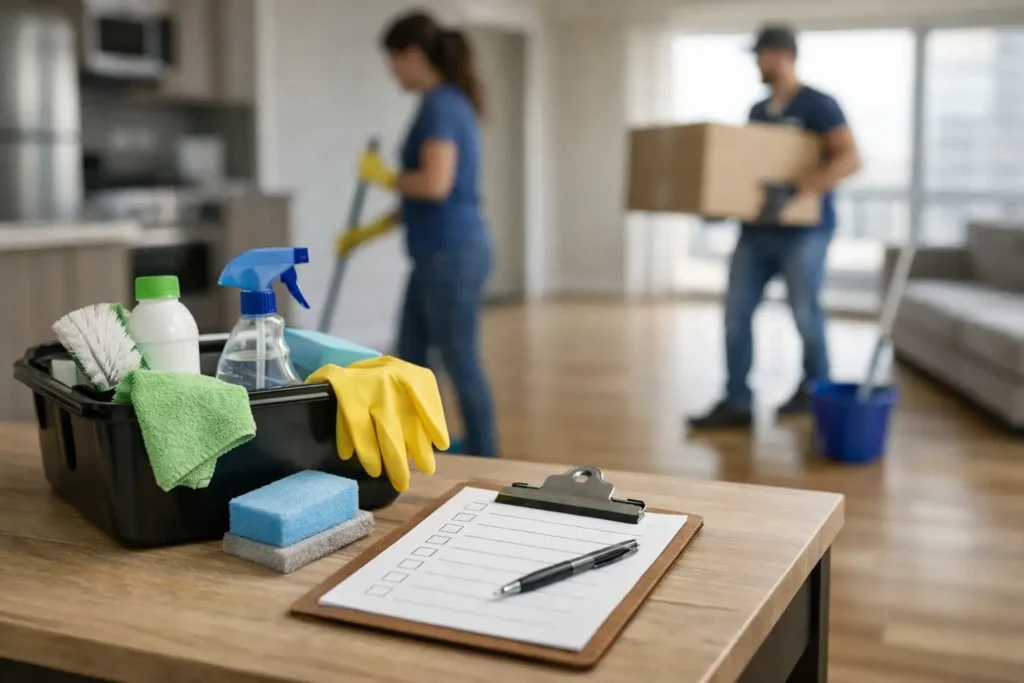
Keep trash bags, microfiber cloths, a scrub sponge, vacuum, mop, glass cleaner, disinfectant, and a degreaser nearby. If you have to stop and hunt for supplies every ten minutes, the job drags. If you are booking service, make sure the team knows whether it is a move-in or move-out appointment and whether the unit will be empty. That changes how the clean is planned.
For people who want the move handled without extra friction, Smart Cleaning can be a practical option, especially when timing is tight and the goal is to get the place truly ready, not just quickly wiped down.
A clean handoff matters. Whether you are returning keys, welcoming new tenants, or starting fresh in a new place, the right checklist helps you leave less to chance and more to done.