
A late checkout, a same-day arrival, and a cleaner who misses the hair in the shower drain can turn one busy afternoon into a bad review. A dependable rental turnover cleaning process prevents that scramble. It gives every reset a clear order, catches the details guests notice first, and gets your New York rental ready on time.
For Airbnb hosts, furnished rental owners, and property managers, turnover cleaning is more than a quick wipe-down. It is the handoff between one guest’s stay and the next guest’s first impression. The goal is simple: make the space feel clean, stocked, safe, and completely ready to use.
Start the Rental Turnover Cleaning Process Before the Cleaner Arrives
The fastest turnovers are planned before the door opens. Confirm the checkout and check-in times, how many guests are expected, whether pets were allowed, and whether the incoming guest has requested an early arrival. In a New York apartment, elevator reservations, building access rules, and laundry room availability can also affect the schedule.
Give the cleaning team one source of truth for entry instructions, Wi-Fi details, supply locations, and any property-specific quirks. Maybe the bathroom fan switch is hidden behind the door, the garbage room requires a key fob, or the dishwasher needs to be started before leaving. Small notes save time and prevent missed tasks.
A quick message from the departing guest can help, too. Ask whether anything was damaged or not working. Guests will not always report a broken lamp or a stained throw pillow, but checking early gives you a chance to handle it before the next arrival.
Use a Room-by-Room Reset, Not a Random Clean
Turnover work needs a repeatable route. Cleaning one room fully at a time reduces backtracking and makes it easier to inspect the property before the team leaves. The exact order can change based on the apartment layout, but this five-step process keeps the work moving.
1. Clear the property and check for damage
Start with a walk-through. Collect trash, remove leftover food, strip used linens, and check closets, drawers, under beds, and behind doors for guest belongings. Lost-and-found items should be photographed, labeled, and stored according to your property policy rather than tossed in a catch-all bin.
This is also the time to flag damage. Look for makeup stains on towels, chipped dishes, scuffed walls, missing remotes, broken blinds, and loose furniture. Take clear photos before cleaning if there is an issue. A clean room can hide evidence that matters for a damage claim.
2. Reset the bathroom to a guest-ready standard
Bathrooms can make or break the first impression. Clean and disinfect the toilet, sink, vanity, shower, tub, fixtures, mirrors, and high-touch surfaces. Remove hair from the drain, corners, walls, and floor. Replace used toilet paper rolls, refresh hand soap, and set out clean bath towels, hand towels, and washcloths.
Do not stop at what is visible from the doorway. Check the shower curtain or glass for soap buildup, the toilet base for splashes, and the vanity drawers for forgotten items. A bathroom should smell neutral and look dry, bright, and ready for immediate use.
3. Make the kitchen functional, not just shiny
A clean kitchen has to work for the next guest. Wipe counters, cabinet pulls, appliance handles, the sink, stovetop, microwave, refrigerator shelves, and dining surfaces. Empty the refrigerator of old food unless a sealed item is intentionally left for guests. Run the dishwasher or hand-wash every dish, then put everything back where guests expect to find it.
Restock the basics based on your rental setup: dish soap, a fresh sponge, paper towels, dishwasher pods, trash bags, and coffee supplies if those are part of your listing. This is a place where consistency matters. If guests received coffee pods and filtered water last month, a missing refill this month can feel like a downgrade.
4. Refresh bedrooms and living areas from top to bottom
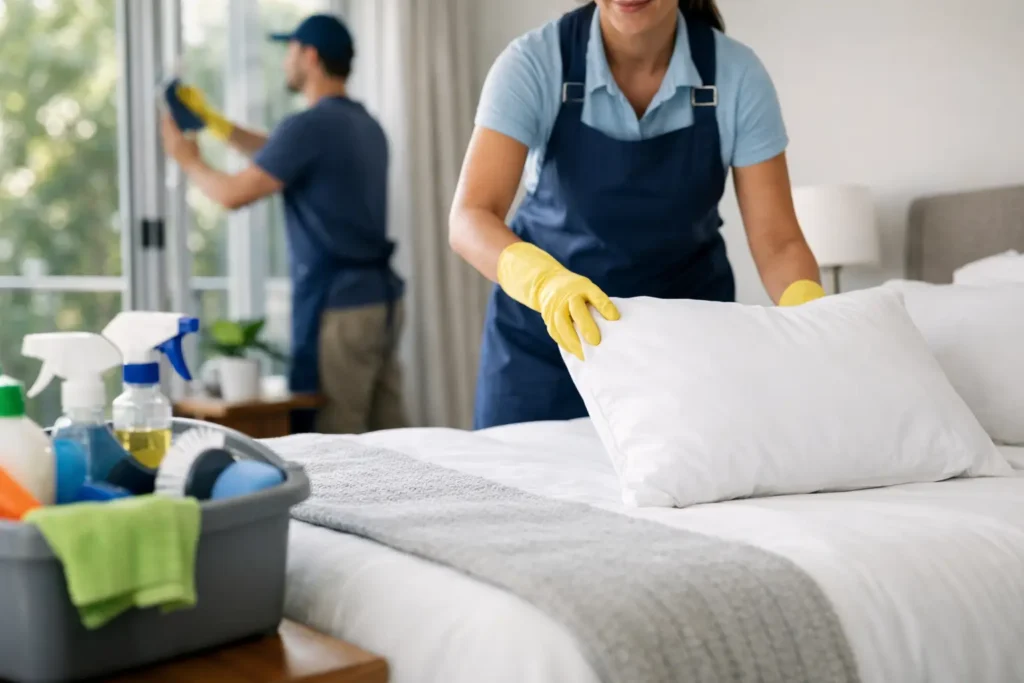
Dust surfaces, lamps, window ledges, and reachable vents before vacuuming or mopping the floor. Change all bed linens, check mattress and pillow protectors for stains, and make beds tightly enough that the room looks cared for in photos. Fluff pillows, straighten curtains, and wipe nightstands, remotes, switches, and door handles.
In the living room, inspect cushions for crumbs and stains, vacuum upholstery as needed, and make sure throws are fresh. Clean fingerprints from glass tables and TV screens carefully. A full upholstery treatment is not necessary after every guest, but it is worth scheduling when a sofa carries odors, visible marks, or pet hair that routine vacuuming cannot remove.
5. Finish with floors, supplies, and a final inspection
Vacuum rugs, carpets, baseboards, and corners, then mop hard floors with a product suited to the material. New York apartments collect street dust quickly, especially near entryways and windows. Pay attention to the first few feet inside the door because that is where guests form an immediate opinion.
Before leaving, empty every trash can, replace liners, check that lights and remotes work, and make sure windows are closed and the thermostat is set appropriately. Replenish essentials and stage the home simply: chairs aligned, towels folded, beds made, and no cleaning supplies left in guest-facing areas unless they are intentionally provided.
Build in a Quality Check Before Check-In
Cleaning and inspection are related, but they are not the same job. The person who cleaned the apartment may move quickly past a detail they have seen all day. A final walk-through with fresh eyes catches problems such as a streaked mirror, an unmade sofa bed, a forgotten bag of laundry, or a low supply of toilet paper.
Use a consistent inspection checklist and take a few post-clean photos. Photos provide a useful record of property condition and make remote management easier. They are especially valuable when you manage multiple units or cannot visit between every booking.
The best inspection begins at the front door. Walk in as a guest would. Notice the smell, lighting, temperature, and what is visible first. Then check the bathroom, kitchen, bed, and Wi-Fi or welcome information. If anything would make you hesitate to unpack, fix it before the next guest arrives.
Know When a Standard Turnover Is Not Enough
Not every departure needs a deep clean, but some clearly do. A normal turnover keeps a well-maintained rental guest-ready between stays. A deep clean addresses buildup and areas that do not need attention after every booking, such as inside cabinets, behind furniture, interior windows, grout, walls, vents, and detailed appliance cleaning.
The right schedule depends on occupancy, guest count, pets, property age, and how carefully the unit is maintained. A studio used for short weekend stays may need a deeper service less often than a larger apartment hosting families or pet owners. What should not vary is the baseline: fresh linens, clean bathrooms, functional kitchen supplies, and a careful final check every time.
Avoid the Turnover Mistakes Guests Notice Fast
Rushing is understandable when the calendar is tight, but it usually shows up in predictable places. Hair, odors, sticky surfaces, poorly washed dishes, depleted supplies, and overflowing trash are the common culprits. So are small maintenance issues that have been ignored because they are not technically cleaning tasks.
Set a clear process for reporting those issues. A cleaner should be able to flag a leaking faucet, dead smoke detector battery, damaged wall, or malfunctioning lock immediately. The quicker you know, the more likely you are to solve it before it affects a stay.
It also helps to keep turnover supplies standardized across properties. When every unit uses a different sheet size, trash liner, coffee setup, or cabinet location, the team loses time searching. Standardization may feel less personal, but it makes reliable service much easier to deliver.
A rental should never feel like the previous guest just left. It should feel like it was prepared specifically for the person walking in next. With a clear process and a responsive cleaning partner such as Smart Cleaning, hosts can protect their time while giving every guest the clean, comfortable arrival they expect.