

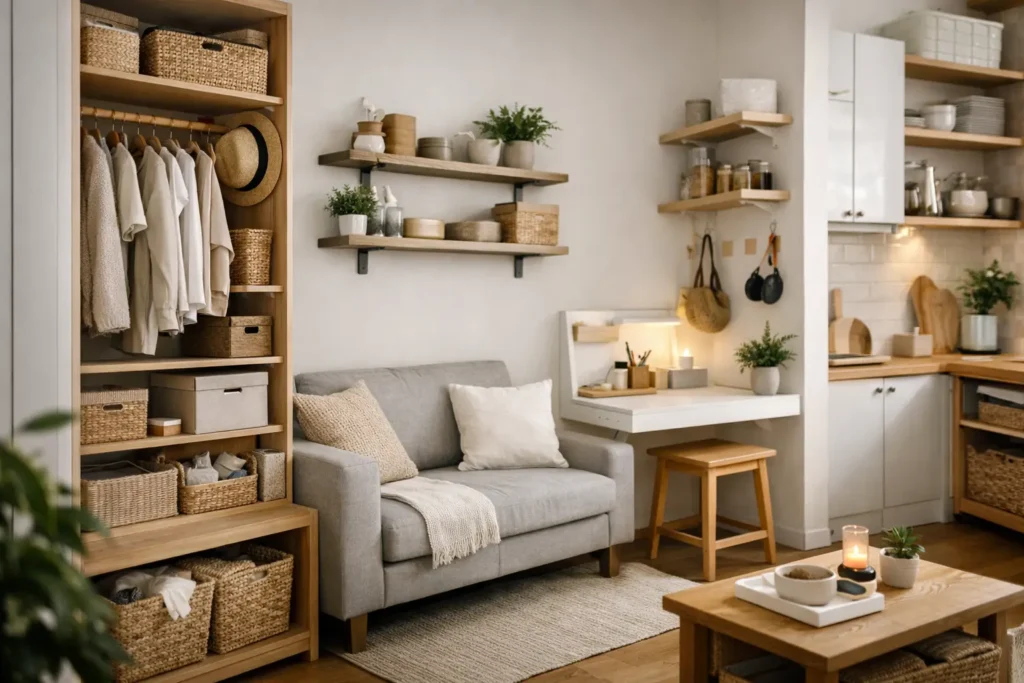
The chair by the front door should not have to become a coat rack, mail station, laundry pile, and storage unit all at once. In a compact New York home, every surface gets assigned a job fast. Smart home organization for small spaces starts by giving each item a clear place, so your apartment feels easier to use and easier to clean.
A small home does not need more decorative bins or a complicated system you will abandon next month. It needs fewer obstacles between you and daily life. The goal is simple: make the things you use easy to reach, keep visual clutter under control, and stop storing items that do not earn their square footage.
Start With How You Actually Live
Before buying organizers, take a quick look at where clutter returns. The answer is usually not that you are disorganized. It is that your current setup does not match your routine.
If you drop keys, headphones, and mail near the door, create a landing zone there. A small tray, wall hooks, and a slim mail holder can prevent that daily pileup. If workout clothes live on the bedroom floor because the hamper is across the apartment, move the hamper closer. Good organization follows your habits instead of asking you to change everything at once.
Focus first on the areas that affect your day most: the entryway, kitchen counters, bathroom vanity, closet, and the spot where you work or pay bills. Clearing one high-traffic area can make the whole home feel more manageable.
Home Organization for Small Spaces Starts With Less
Storage is useful, but it cannot solve an overflow problem on its own. When a studio or one-bedroom is packed with items you rarely use, even the best shelves will feel crowded. Start with a practical edit before organizing what remains.
Pull out one category at a time, such as mugs, winter accessories, cleaning products, or beauty items. Keep what you use, what fits your current life, and what you would reasonably replace if it disappeared. Let go of duplicates, expired products, damaged items, and things you have been saving out of guilt.
Be realistic about space limits. A small kitchen may not hold every appliance, serving dish, and bulk purchase at once. A tight closet may require seasonal rotation. This is not a failure of the home. It is simply a reason to make choices that keep the space working well.
Avoid organizing by moving excess items into random bags, under-bed piles, or the back of a closet. That only delays the problem and makes cleaning harder later. Keep the items you need, then give them a home you can maintain.
Use Vertical Space Without Making Rooms Feel Crowded
When floor space is limited, walls can do more work. The key is to use vertical storage with purpose, not turn every wall into a storage display.
In an entryway, hooks can hold bags, umbrellas, and jackets that would otherwise land on furniture. In a kitchen, a wall-mounted rail or magnetic strip can free up drawer space for utensils and knives. Above a toilet, narrow shelving can hold extra paper goods and everyday toiletries. Inside a closet, shelf risers, hanging organizers, and over-the-door storage can create room without adding another piece of furniture.
Open shelving works best for attractive, frequently used items or neatly labeled containers. If it becomes a catch-all, it can make a small room feel busier. For visual calm, use closed storage for backups, paperwork, cords, and anything you do not need to see every day.
Renters should also think about flexibility. Removable hooks, tension rods, freestanding shelves, and over-the-door organizers can add function without risking a security deposit. Measure first, especially in older New York apartments where closets and door frames are rarely standard sizes.
Give Every Zone One Clear Job
Small spaces often serve several purposes at once. Your dining table may be a desk during the day. Your living room may double as a guest room. Your bedroom closet may also store luggage, cleaning supplies, and off-season clothes. Multi-use is normal, but each function needs clear boundaries.
Create simple zones using furniture placement, trays, baskets, or a small rolling cart. A tray on a coffee table can contain remotes and chargers. A lidded basket beside the sofa can hold blankets. A narrow cart can keep work supplies together, then roll out of sight after the workday ends.
For a room that changes function often, choose items that are quick to reset. A folding desk, nesting tables, storage ottoman, or bed with drawers can help. The trade-off is that multi-purpose furniture is only useful if you can access it easily. A storage bed packed so tightly that it is difficult to open will not help during a rushed morning.
Make the Kitchen and Bathroom Easy to Reset
These rooms collect clutter quickly because they support so many daily routines. A few simple limits can make a major difference.
In the kitchen, keep counters for cooking, not long-term storage. Put appliances away if you use them only occasionally, and group supplies by task: coffee items together, baking tools together, lunch containers together. Clear containers and labels can help, but only where they make restocking easier. You do not need to decant every pantry item to have an organized kitchen.
Use drawer dividers for utensils and cooking tools, and add small bins under the sink for sponges, trash bags, and cleaning products. Keep one go-to cleaning set nearby so wiping down the kitchen does not require a search through several cabinets.
In the bathroom, limit the vanity to daily essentials. Store backups together in one labeled bin, check expiration dates, and avoid buying more than your available storage can hold. A shower caddy, medicine cabinet organizer, and drawer inserts can keep small products from taking over every surface.
Build a System You Can Maintain in Ten Minutes
The best organization system is not the prettiest one. It is the one you can put back in order after a long workday.
Aim for a short reset rather than a major weekend project. Put away dishes, return items to their zones, fold the throw blanket, clear the bathroom counter, and do a quick sweep of the entryway. Ten focused minutes can stop small messes from becoming a full apartment reset.
Make putting things away as easy as taking them out. Bins should not be too full. Labels should be obvious. Everyday items should not be stored behind three other things. If an area repeatedly gets messy, adjust the system instead of blaming yourself. Perhaps the basket is too small, the shelf is too high, or the item belongs closer to where you use it.
A regular cleaning routine also protects your organization. Dust and grime build up faster when shelves, closets, and counters are crowded. Once items have a place, cleaning becomes faster because surfaces are clear and supplies are easy to find.
Know When a Fresh Set of Hands Helps
Organizing a small space can feel especially overwhelming before a move, after a busy season, or when an Airbnb needs to be guest-ready on a tight turnaround. In those moments, professional support can help you move from cluttered to functional without spending every free hour sorting and scrubbing.
Smart Cleaning helps New York households create cleaner, more manageable spaces with dependable home care support. Whether you need a reset before settling into a new apartment or help maintaining a home that is already organized, the right support gives you back time and breathing room.
A small home should not feel like a constant project. Start with one problem area, create a simple home for what belongs there, and make your next reset easy enough to do before the day gets away from you.