

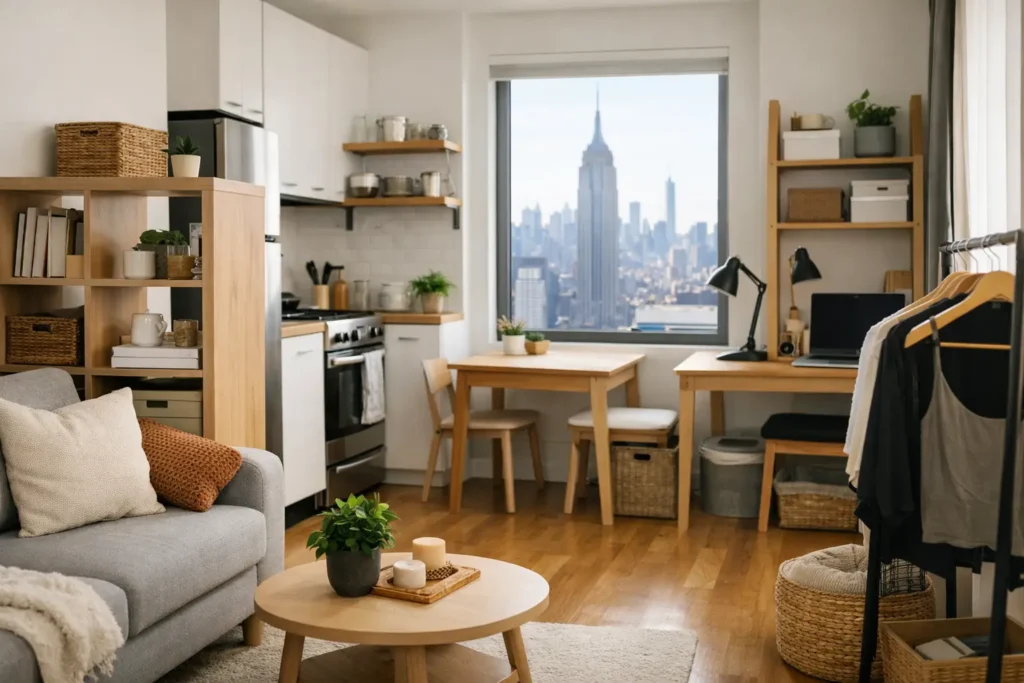
A small New York apartment can go from comfortable to chaotic fast. One unopened delivery box, a chair used as a closet, or a kitchen counter covered in mail can make the whole place feel smaller. Learning how to organize small apartments is less about buying more storage bins and more about giving every square foot a clear job.
The goal is not a picture-perfect apartment that is hard to live in. It is a home that works on a busy Tuesday morning, after a long commute, or when friends stop by with little notice. Start with the spaces and habits that create the most daily friction, then build simple systems you can actually maintain.
Start by Clearing What Does Not Belong
Before adding shelves, hooks, or drawer dividers, reduce what is competing for space. In a studio or one-bedroom, every item has a visual impact. That includes clothing you do not wear, duplicate kitchen tools, expired toiletries, old paperwork, and furniture that blocks movement without providing enough function.
Work one category at a time instead of emptying your entire apartment at once. Start with the easiest win, such as bathroom products or a kitchen drawer, and make quick decisions: keep, donate, recycle, or throw away. This approach prevents the familiar problem of creating a larger mess halfway through the project.
Be honest about what your apartment can support. A full dinnerware set for 12 may make sense in a large home, but it can take over a compact kitchen where two people rarely host. Keep what fits your real life, not the version of life you feel obligated to store.
How to Organize Small Apartments by Zone
Small homes need defined zones, even when there are no walls separating them. A studio can still have a sleeping area, work area, dining spot, entryway, and living space. The clearer those zones are, the less likely belongings are to travel from one area to another and stay there.
Start at the entry. Add a designated place for keys, bags, shoes, coats, and mail. A narrow wall hook rack, a small tray, and a closed shoe cabinet can prevent the front door area from becoming a daily drop zone. If mail tends to pile up, sort it immediately into recycle, action, and file categories.
Your work area deserves boundaries too. If your desk shares space with your dining table, use a portable work caddy for chargers, notebooks, and office supplies. At the end of the workday, pack it away. That small reset helps your apartment feel like home again instead of a permanent office.
In the bedroom, protect the bed from becoming storage. A bed covered in laundry, packages, and laptop cords makes the room feel crowded and makes rest harder. Use a hamper for clothes, a charging station near the nightstand, and under-bed storage for items you do not need every day.
Choose Furniture That Earns Its Space
In a small apartment, furniture should do more than one job whenever possible. A storage ottoman can hold blankets and serve as extra seating. A bed frame with drawers can replace a bulky dresser. A drop-leaf table can create a dining surface when needed without taking over the room all week.
That said, multifunctional furniture is not always the right answer. A sleeper sofa may sound efficient, but it can be uncomfortable for daily use and frustrating to open and close. Consider what you use most often. A comfortable sofa and a nearby folding guest mattress may work better for someone who hosts overnight guests only a few times a year.
Look at furniture scale as carefully as storage capacity. One oversized sectional can make a living room feel tight even if it has hidden compartments. Pieces with visible legs, slimmer profiles, and lighter visual weight usually keep a room feeling more open. Leave clear paths between the door, seating, kitchen, and bathroom whenever possible.
Use Vertical Space Without Creating Clutter
When floor space is limited, walls and doors become valuable storage areas. Tall shelving, wall-mounted cabinets, over-the-door organizers, and hooks can hold a surprising amount without making the apartment harder to move through.
Use vertical storage for categories that are easy to grab and put back. Kitchen shelves can hold dry goods and everyday dishes. Bathroom wall storage can hold extra towels and personal care products. Hooks near the door can handle outerwear and umbrellas. Keep the items you use most between waist and eye level, and reserve high shelves for seasonal or occasional items.
Closed storage is especially useful in a compact home because it reduces visual noise. Open shelves are attractive, but they require regular editing and neat containers to avoid looking crowded. If you love the look of open shelving, limit it to a few useful, consistent categories rather than using it as a catch-all.
Build Storage Around Your Daily Routine
The best organizing system is one that takes very little effort to use. If a storage location is too far away, too difficult to access, or too full to put anything back into, clutter will return quickly.
Keep laundry where clothes come off. Store cleaning supplies where you clean, while keeping them safely out of reach of children and pets. Put coffee supplies close to the coffee maker. Keep extra trash bags at the bottom of the trash can or directly nearby. These small choices remove extra steps and make routines easier to repeat.
Give your apartment a reset point each day. Ten minutes in the evening can handle dishes, clothes, mail, counters, and stray items before they turn into a weekend project. This is also a good time to clear the sink and wipe down high-use surfaces. A clean, organized home feels more spacious because you can see and use the space you already have.
For a weekly reset, focus on four areas that tend to affect the whole apartment: the entryway, kitchen counters, bathroom surfaces, and floors. When these areas are clear and clean, the home feels under control even if a closet still needs attention.
Make Closets and Cabinets Work Harder
Closets in NYC apartments often have limited depth, awkward layouts, or a single shelf doing too much work. Use matching slim hangers to create room, then separate clothing by type so you can see what you own. Add shelf dividers for folded items and labeled bins for accessories, seasonal pieces, or linens.
Do not fill every inch of a closet just because the space exists. A packed closet makes it difficult to find items and nearly impossible to put them away quickly. Leave a little breathing room so your system remains useful during laundry day, seasonal changes, and busy weeks.
Kitchen cabinets benefit from the same logic. Group items by task: cooking tools near the stove, food containers together, baking supplies in one area, and everyday dishes within easy reach. If a cabinet is deep, use pull-out bins or turntables so items in the back do not disappear for months.
Know When to Bring in Help
Organizing can be difficult when the apartment is already overwhelmed, you are preparing for a move, or you simply do not have time to spend a weekend sorting and cleaning. In those moments, having dependable support can turn a stressful project into a manageable reset.
Smart Cleaning helps New York households handle home organization alongside practical cleaning support, whether you need to refresh a lived-in apartment, prepare for move-in, or get a space ready after a move. The right help lets you focus on decisions while someone else handles the work that keeps your home clean and usable.
A small apartment does not need more square footage to feel better. It needs clear surfaces, easy routines, and enough room for the life you are living now. Start with one problem area today, put a simple system in place, and let the space get easier to come home to.