
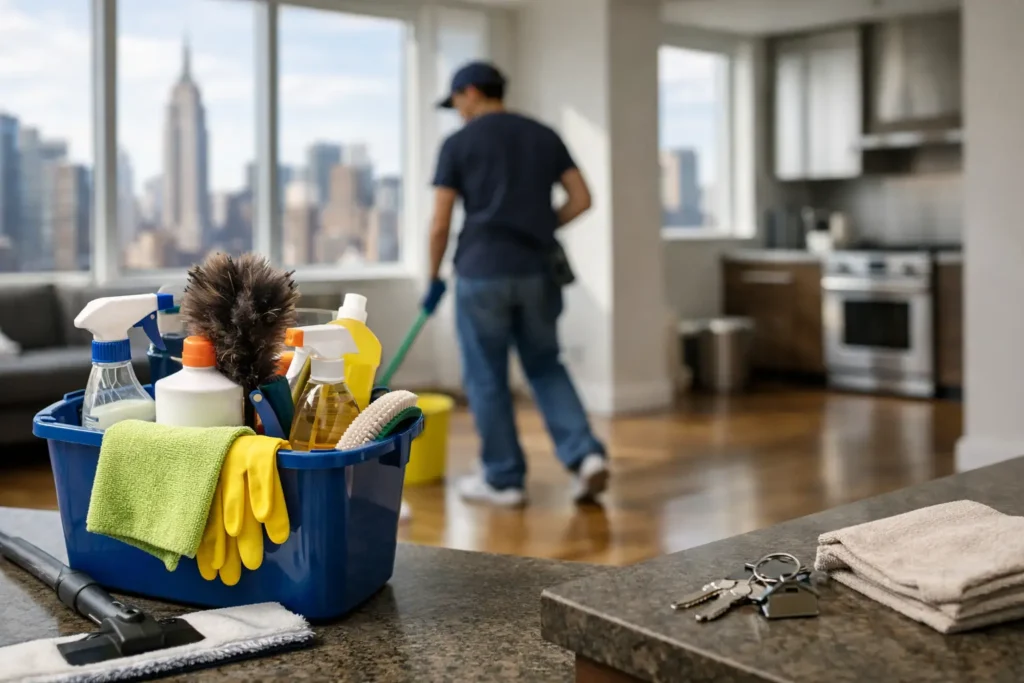
A fast apartment turnover can go sideways over one missed detail: a sticky cabinet shelf, hair in the shower drain, an old takeout container hiding in the fridge. This apartment turnover cleaning checklist helps New York renters, landlords, property managers, and short-term rental hosts reset a space properly before the next person walks in.
The goal is not just to make an apartment look clean for five minutes. It is to make the home feel fresh, functional, and ready to use. In a city where move dates, building rules, elevator reservations, and guest check-ins all run on a tight schedule, a clear process saves time and prevents expensive last-minute fixes.
Start With a Fast Walk-Through
Before bringing in cleaning supplies, walk every room with your phone or a notepad. Look for damage, left-behind belongings, maintenance issues, and areas that need extra attention. Cleaning a room before documenting a cracked tile or a leaking faucet can create confusion later.
Check that lights work, windows lock, appliances turn on, and smoke or carbon monoxide detectors appear intact. If you manage a rental, take dated photos of the apartment’s condition before and after the turnover. This is especially useful between tenants, when normal wear and actual damage may need to be clearly separated.
Remove all trash and personal items first. Empty closets, drawers, cabinets, and the medicine cabinet. Do not assume an item left behind is garbage if it could be valuable or sensitive. When in doubt, set it aside and follow your property’s lost-item policy.
Apartment Turnover Cleaning Checklist by Room
A room-by-room approach keeps the job moving and reduces backtracking. Start high and work down: dust ceiling fans and ledges first, then clean surfaces, then finish floors. Work from the farthest room toward the exit so you are not walking across freshly mopped areas.
Entryway, Hallways, and Living Areas
The first impression starts at the front door. Wipe the door, handle, buzzer area, light switches, baseboards, and any visible marks on walls. Dust vents, blinds, window sills, radiators, and ceiling fixtures.
Vacuum upholstered furniture if it stays with the apartment, including under cushions and along seams where crumbs and pet hair collect. Clean mirrors and glass without leaving streaks. For hardwood, vinyl, or tile floors, use a cleaner suited to the surface. Too much water on wood floors can cause damage, while harsh products can dull certain finishes.
Pay close attention to corners and behind doors. These are the places dust bunnies like to settle in after a tenant or guest has packed up.
Kitchen
A clean kitchen is one of the clearest signs that a turnover was handled with care. Empty the refrigerator and freezer completely, including drawers and door bins. Clean spills, sanitize handles, and leave the appliance dry to avoid odors. If the unit will sit vacant for more than a few days, follow the owner’s preference on whether the refrigerator should remain plugged in.
For the oven, remove racks and clean the interior, stovetop, knobs, hood, and backsplash. Degrease cabinet fronts, especially near the range. Wipe inside every cabinet and drawer, because crumbs, liners, and spilled spices are common move-out leftovers.
Finish the kitchen by cleaning the sink, faucet, disposal area, dishwasher filter if accessible, counters, and floors. Run the dishwasher empty if needed and check for pooled water or food debris. A bad kitchen smell often comes from a drain, trash area, or overlooked refrigerator shelf.
Bathrooms
Bathrooms need more than a quick spray-and-wipe. Remove hair from drains, clean the toilet inside and out, and disinfect high-touch points such as the flush handle, faucet handles, towel bars, and light switches. Scrub the shower or tub, including grout lines, corners, shelves, and the shower door track.
Wipe mirrors, polish fixtures, and clean the vanity inside and out. Check under the sink for drips, empty containers, or signs of pests. Replace burned-out bulbs and confirm the exhaust fan works if possible. A clean bathroom should smell neutral, not heavily perfumed. Strong fragrance can cover up a moisture or drain problem that needs attention.
Bedrooms and Closets
Dust all surfaces, including bed frames, headboards, window treatments, baseboards, and closet shelves. Vacuum or mop beneath furniture that stays in the unit. Open every closet and drawer to make sure nothing was missed.
For furnished apartments or short-term rentals, inspect mattresses, pillows, and upholstered pieces for stains, odors, or damage. Fresh linens matter, but they do not solve an underlying upholstery issue. If fabrics need deeper care, schedule upholstery cleaning rather than trying to mask the problem with air freshener.
Floors, Windows, and Final Touches
Vacuum carpets slowly enough to pull out embedded debris, especially around room edges and under furniture. Spot-treat stains only with products that match the carpet or rug material. For heavily soiled carpeting, professional treatment is usually the better call before a new resident moves in.
Clean interior windows where accessible, along with tracks, sills, and blinds. In NYC apartments, window tracks can collect a surprising amount of city dust and grit. Wipe down baseboards one last time, then mop hard floors after all other cleaning is complete.
Do Not Miss These Turnover Details
Small details can decide whether a space feels truly ready or merely rushed. Before closing the door, check these common problem areas:
- Inside the microwave, toaster oven, and dishwasher
- Behind the toilet and around the base
- Cabinet tops, drawer interiors, and under-sink storage
- Refrigerator seals, ice trays, and crisper drawers
- Shower curtain liners, drain covers, and bathroom exhaust vents
- Light switches, outlet covers, doorknobs, and thermostat controls
- Balcony or patio areas, if included with the apartment
- Trash bins, recycling containers, and the area around them
This is also the right time to restock items for a short-term rental. Confirm that towels, linens, toilet paper, soap, trash bags, and basic kitchen supplies meet your property standard. For a long-term rental turnover, confirm that keys, fobs, remotes, and building access items are accounted for.
Know When Cleaning Is Not Enough
A turnover checklist helps separate routine cleaning from work that needs a specialist. Report water stains, mold-like growth, pest activity, broken caulk, damaged flooring, appliance problems, or persistent odors right away. A spotless apartment with a leaking sink is not move-in ready.
It also depends on the type of turnover. A same-day Airbnb reset needs speed, fresh linens, and a careful guest-ready inspection. A move-out clean may require more time for grease, wall marks, empty cabinets, and built-up bathroom residue. A vacant apartment undergoing repairs should usually be cleaned after contractors finish, not before.
For busy property owners and residents, Smart Cleaning can handle the heavy lifting when schedules are tight and the apartment needs to be ready without cutting corners. A dependable team gives you one less moving part to manage.
Final Pre-Handoff Check
Do one final walk-through with the lights on and the cleaning supplies packed away. Stand at the entry, look across each room, and check for fingerprints, crumbs, odors, missed trash, or supplies left behind. Open the refrigerator, inspect the bathroom, and test the apartment from the perspective of someone arriving for the first time.
A well-turned-over apartment should feel calm the moment the door opens. That feeling comes from the details: an empty fridge, a dry shower, clean floors, clear counters, and no surprises waiting in a closet.